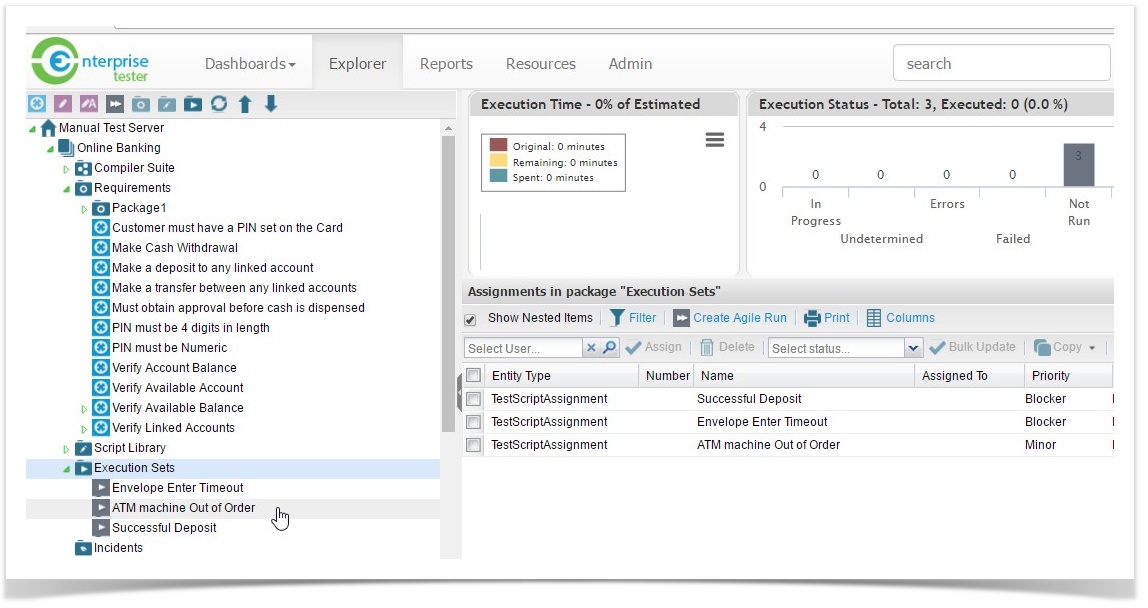
Test Execution data is created when you move Test Scripts into the Execution Sets folder. This is also where you run your tests from.
You can group your test runs however it makes sense for your project — by release, iteration, or system, for example — and you can re-run them whenever needed.
If you update a Test Script, those changes will automatically be reflected in the related Test Execution data — unless the test is currently being run.
New! Start and End Dates for Test Execution Folders
You can now add a Start and End Date to your Test Execution Folders. These dates can be super handy for reporting, especially if you're pulling data using the API.
When you create an Execution Folder, you'll see new fields for Start and End Date. They're completely optional — you can leave them blank, fill in just one, or enter both.
You can also edit existing Execution Packages to add Start and End Dates. This means you can go back and update older packages with date information if needed.

Create Execution Sets by dragging a Requirement into the Execution Sets area
Test Execution data can also be created by dragging a single Requirement (that has Test Scripts associated to the Requirement) and dropping it directly into the Execution Sets folder or a Package within the Execution Sets folder.
Note: This only works if there are Test Scripts associated with the Requirement.
- Ensure the Requirement has Test Scripts associated to the Requirement
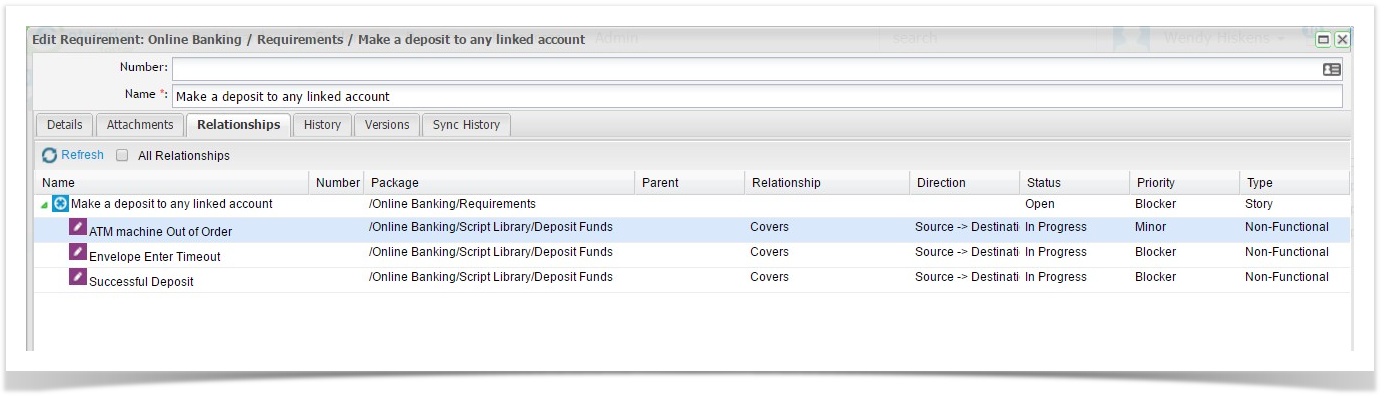
- Drag the Requirement (that has associated Test Scripts) into the Execution Sets folder or Package within Execution Sets folder.
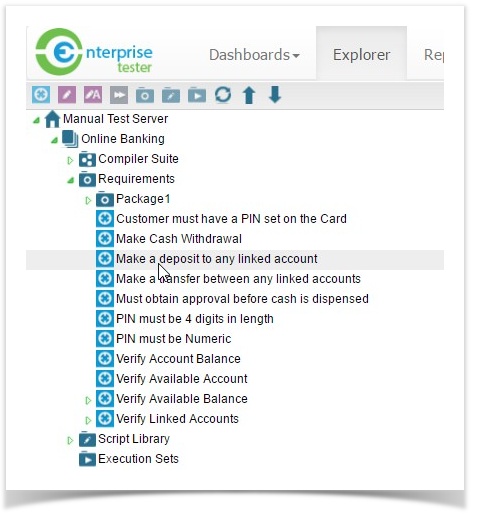
All Test Cases associated with that Requirement now have Test Executions visible under the Execution Sets folder or Package